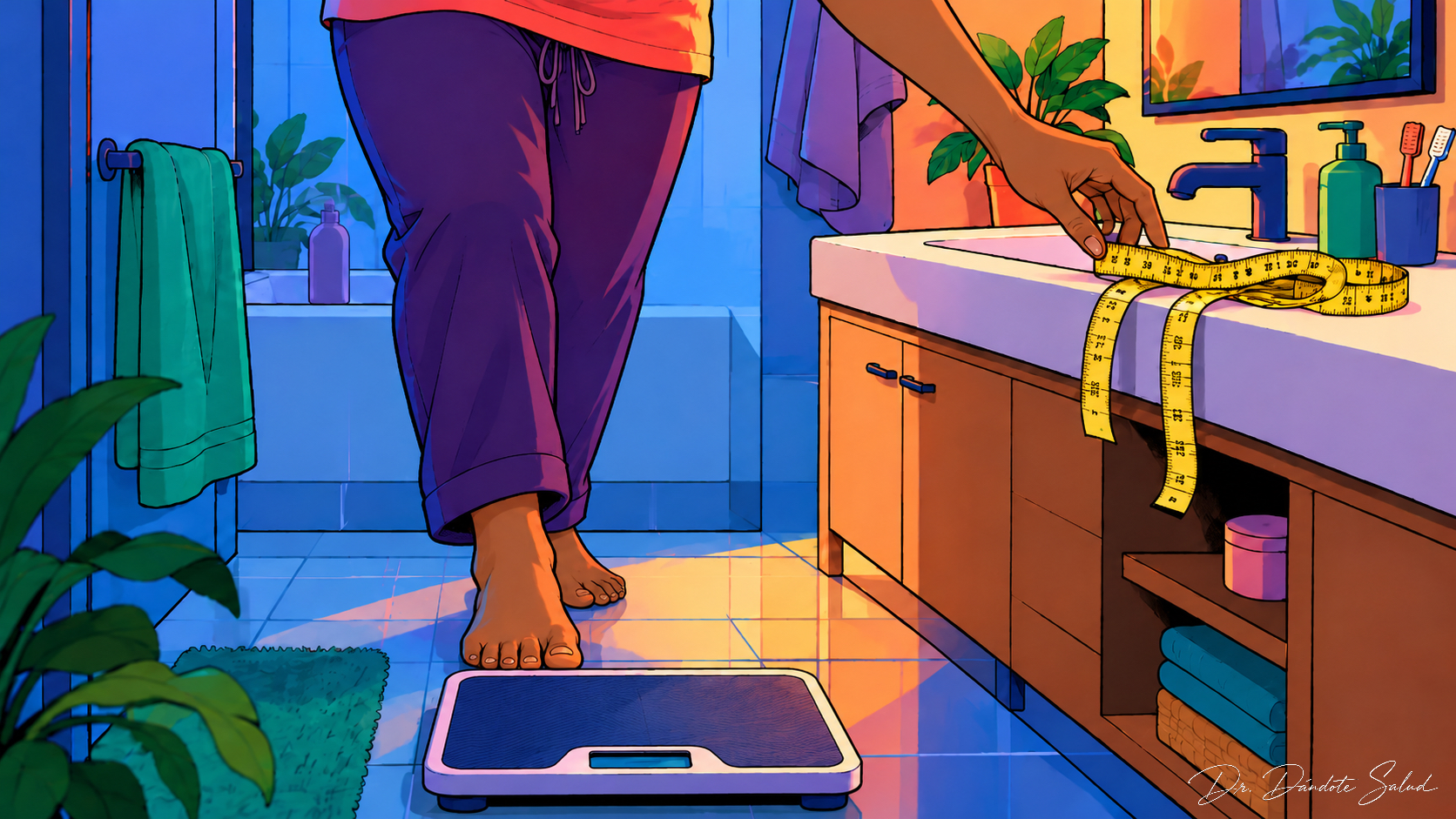
Have you ever felt like your mind doesn’t have an “off” switch?
You go to bed exhausted, your body is on the mattress, but your mind is still in that meeting, worrying about bills, or thinking about the health of someone you love. Your heart is a bit faster, your stomach is tight, and there’s a constant sense that you’re “behind,” even when you’re not moving at all.
If that sounds familiar, you’re not alone: today, roughly one in three adults worldwide reports feeling stressed on a regular basis (Smith & Wesselbaum, 2025; Daly & Macchia, 2023).
Stress is not a character flaw. It’s an alarm system that got stuck on high volume. As a family physician, I won’t promise you a life with zero stress. What I can offer is a roadmap to turn down the volume and reclaim something essential: your sense of control.
In this article you’ll learn:
- Why chronic stress is so common today and how it affects your body and mind.
- Which strategies have the strongest evidence for at-home stress management (breathing, relaxation, mindfulness, exercise, journaling, music, digital tools).
- Why focusing on what you can control in the present is more protective than trying to control everything around you.
Three key ideas:
- The goal is not to erase stress, but to modulate it.
- Present control and healthy relationships act like powerful medicines.
- Small daily practices (5–20 minutes) can reshape your stress physiology over time.
One action for today:
Pick one single practice from this article (for example, 5 minutes of abdominal breathing) and try it today, even if it’s not perfect.
1. Why does stress matter so much right now?
Global data are clear: about 35% of people worldwide report experiencing stress, and that number has risen steadily, with a sharp increase during the COVID-19 pandemic (Smith & Wesselbaum, 2025; Piao et al., 2024). Women, younger adults, those with unstable income, and people with chronic illness are especially vulnerable.
What worries me most as a doctor is what chronic stress does to your body:
- It alters cortisol secretion, the classic stress hormone.
- It disrupts cardiovascular, immune, and metabolic systems (Kiecolt-Glaser et al., 2020).
- It increases the risk of depression, anxiety, chronic pain, and heart disease.
When that internal alarm stays on for too long, the body enters a vicious cycle: more stress → more physiological dysregulation → more illness → even more stress (Smyth et al., 2020; Kiecolt-Glaser et al., 2020).
Love, relationships, and happiness: natural stress modulators
The hopeful part is this: not everything in your life increases stress. We also know that:
- Social support and positive relationships buffer the stress response and protect heart health (Ebong et al., 2024).
- Feelings of love, connection, and purpose can dampen stress reactivity, even when life remains objectively difficult.
That’s why true stress management is not just about individual techniques. It also includes how you live your relationships, your community, and your sense of purpose.
2. What does it really mean to “manage” stress?
Managing stress is not about “toughing it out” or pretending everything is fine. And it’s definitely not about controlling every external event—because that’s impossible.
Recent research highlights a key idea:
The principle of present control
Focusing on what you can control in the present moment is linked to lower stress, greater well-being, and a stronger sense of control, beyond simply matching your coping style to each situation (Person & Frazier, 2024).
This present-focused control grows through engaged coping strategies, like:
- Actively addressing a problem when possible.
- Using realistic, comforting thoughts (“this is hard, but I’m not alone; I can do X today”).
- Reaching out for appropriate support.
And it shrinks with disengaged strategies, such as:
- Chronic avoidance.
- Numbing out with substances.
- Passive resignation (“that’s just how I am; nothing can change”).
People who lean into their stressors—rather than shutting down—report more control and better mental health (Dijkstra & Homan, 2016).
It’s not about one magic tool, but your personal toolkit
When we look at the scientific literature, several types of interventions help reduce stress:
- Cognitive behavioral therapy (CBT)
- Mindfulness and meditation
- Relaxation and breathing techniques
- Physical exercise
- Therapeutic journaling
- Digital and app-based interventions
Overall, these approaches reduce stress in the short and medium term with small-to-moderate effect sizes (Tamminga et al., 2023; Rogerson et al., 2024; Sparacio et al., 2024).
My job as a lifestyle medicine physician is not to have you master every option, but to help you build a personal toolkit of 2–3 strategies that fit your life.
3. How can you manage stress at home? (your practical plan)
Let’s build it in layers: breath, body, mind, movement, writing, and connection.
3.1. Breathing: talking directly to your nervous system
Breathing is one of the fastest ways to send a “you’re safe” message to your brain.
a) Abdominal breathing (10–15 minutes, once or twice a day)
How:
- Sit or lie down comfortably.
- One hand on your chest, one on your belly.
- Inhale through your nose for 3–5 seconds, feeling your belly expand.
- Exhale for 5–7 seconds through your nose or mouth.
- Repeat for 5–10 minutes.
Evidence shows this kind of breathing reduces anxiety, heart rate, and blood pressure, and improves nervous system balance (Chai et al., 2025; Fincham et al., 2023).
b) Slow breathing (around 6 breaths per minute)
Try this pattern:
- Inhale 5 seconds
- Exhale 5 seconds
- Gentle pause 2 seconds
Practice 5–10 minutes. This supports heart-rate variability and is linked with lower stress (Little, 2025; Fincham et al., 2023).
3.2. Relaxation and imagery: helping the body let go
a) Progressive muscle relaxation (15–20 minutes)
- Find a quiet place.
- Start with your feet: tense for 5 seconds, then relax 10 seconds.
- Move upward: calves, thighs, abdomen, hands, arms, shoulders, neck, face.
- Notice the difference between tension and relaxation.
This method significantly reduces anxiety and promotes deep relaxation (Toussaint et al., 2021).
b) Guided imagery
- Close your eyes and breathe.
- Picture a place where you feel safe and calm.
- Engage all your senses: sights, sounds, smells, physical sensations.
- Stay there mentally for 10–15 minutes.
Guided imagery can be as effective as progressive muscle relaxation for stress reduction (Toussaint et al., 2021).
3.3. Mindfulness: training attention and acceptance
Mindfulness is not about emptying your mind; it’s about learning to notice without fighting.
a) Breathing meditation (10 minutes a day)
- Sit with a straight but relaxed spine.
- Gently close your eyes or soften your gaze.
- Rest your attention on your natural breath.
- When your mind wanders (it will), label it “thinking” and return kindly to the breath.
Self-guided mindfulness programs have been shown to reduce perceived stress, improve sleep, and dampen physiological stress responses (Aguilar-Raab et al., 2021; Sparacio et al., 2024; Kirk et al., 2023).
b) Body scan
Lie down and slowly move your attention from your feet to your head, noticing sensations without changing them. In a large multi-site trial, body scans produced the largest stress reductions among several mindfulness practices (Sparacio et al., 2024).
c) Acceptance practice
Acceptance—allowing your experience instead of fighting it—seems to be a necessary ingredient for stress resilience (Chin et al., 2019).
When stress shows up:
- Name it: “I’m noticing tightness in my chest.”
- Add kindness: “I don’t like this, but it’s part of being human.”
- Ask: “Given this, what is one thing I can do right now that moves me toward what matters?”
3.4. Movement: using your body to calm your mind
You don’t need a gym membership to get the benefits.
A meta-analysis found small-to-medium anxiety-reducing effects of exercise in people with anxiety and related disorders (Ramos-Sanchez et al., 2021).
A gentle 5-week plan
- Weeks 1–2:
Easy walking, 15–20 minutes, 3–5 days per week. - Weeks 3–4:
Brisk walking, 25–30 minutes. - Week 5 and beyond:
Add short bursts of higher intensity or activities like dancing, swimming, or cycling.
Exercise also acts as exposure to physical sensations many people find scary (like a racing heart), helping your brain reclassify them as normal, not dangerous.
Yoga can also improve anxiety symptoms, though we still need more long-term data (Szuhany & Simon, 2022).
3.5. Journaling: using words to lighten the load
Not all journaling is equally helpful. Studies suggest that:
- Gratitude-focused writing and
- Combining emotional expression with cognitive processing
are more beneficial than simply venting negative emotions (Fekete & Deichert, 2022; Ullrich & Lutgendorf, 2002).
Two journaling formats to try
1. Gratitude journaling (10 minutes, 3 days a week)
Write:
- Three things you’re grateful for today.
- One sentence about how you contributed to each of them.
During the COVID-19 pandemic, this kind of writing helped maintain gratitude and reduced stress and negative affect (Fekete & Deichert, 2022).
2. Constructive stress journaling (20 minutes, 3 days in a row)
Pick a stressful topic and write about:
- What happened and how you feel.
- What you’ve learned or could learn from it.
- What small steps you might take to care for yourself in this situation.
This type of writing has been linked to reduced physical symptoms and better stress recovery, even in chronic illness (Smyth et al., 1999; Hoyt et al., 2021).
3.6. Music, digital tools, and the “4Ds” model
Relaxing music
Listening to calming music 20–30 minutes a day, especially when paired with breathing or relaxation, reduces stress, anxiety, and depressive symptoms (Puyat et al., 2020).
Apps and digital tools
- Mindfulness apps can produce small but meaningful improvements in self-reported stress and physiological measures (Kirk et al., 2023; Sîrbu & David, 2024).
- Internet-based CBT programs show benefits in stress, coping skills, and sleep quality (Stächele et al., 2020; Szuhany & Simon, 2022).
Use them as supports, not as a replacement for professional care.
The “4Ds” for moments of distress
The “4Ds” model offers a simple way to respond to intense distress (Mansell et al., 2020):
- Distract: brief, healthy distraction to lower intensity (short walk, music, simple task).
- Dilute: pair the emotion with something soothing (breathing, stretching, warm shower).
- Develop: take one small step toward something that matters (send a text, pay one bill, schedule an appointment).
- Discover: once the intensity drops, gently reflect on what this stress is telling you about your values and needs.
4. When should you seek professional help?
All of these strategies are valuable, but there are times when they’re not enough on their own.
Reach out to a mental health professional or your primary care doctor if:
- Stress or anxiety significantly interferes with your work, relationships, or self-care.
- You’re having frequent panic attacks.
- You notice persistent sadness, loss of interest, or major changes in sleep or appetite.
- You’ve experienced trauma and feel stuck in reliving or avoiding it.
- You’re having thoughts of self-harm or that life is not worth living.
Cognitive behavioral therapy (CBT) has the strongest evidence for long-term management of anxiety and stress-related disorders, with benefits lasting 12 months or more (van Dis et al., 2020; Cuijpers et al., 2025). Evidence-based mindfulness and regular exercise can be powerful add-ons (Hoge et al., 2023; Ramos-Sanchez et al., 2021).
Reaching out is not a sign of weakness. It’s a sign that you’re protecting the life you want to live.
5. What if you really turned down the volume on stress?
Take a moment to picture your life one year from now if you:
- Practiced breathing or mindfulness 10 minutes a day.
- Moved your body at least 30 minutes, 5 days a week.
- Journaled with gratitude and meaning once a week.
- Invested intentionally in one or two key relationships.
Your problems wouldn’t disappear. But likely:
- You’d sleep better.
- You’d have more clarity to make decisions.
- You might be sick less often—or better equipped to manage what you already carry.
- You’d feel less like your mind is running the show and more like a partner in your own health.
Here at Dr. Dan Giving You Health, we believe well-being is built day by day.
Choose health. Choose life.
I’d love to hear from you:
Which one of these strategies feels most realistic for you to start this week?
Share your answer and your questions in the comments—that’s where the best ideas for future “question of the month” posts are born.
Scientific sources
- Adamson MM, Phillips A, Seenivasan S, et al. International Prevalence and Correlates of Psychological Stress During the Global COVID-19 Pandemic. Int J Environ Res Public Health. 2020.
- Aguilar-Raab C, Stoffel M, Hernández C, et al. Effects of a Mindfulness-Based Intervention on Mindfulness, Stress, Salivary Alpha-Amylase and Cortisol in Everyday Life. Psychophysiology. 2021.
- Chai J, Li S, He L, et al. Clinical Application of Abdominal Breathing Training and Evaluation of Physical and Mental Benefits in Anxiety Patients. Front Psychol. 2025.
- Chin B, Lindsay EK, Greco CM, et al. Psychological Mechanisms Driving Stress Resilience in Mindfulness Training. Health Psychol. 2019.
- Cuijpers P, Harrer M, Miguel C, et al. Cognitive Behavior Therapy for Mental Disorders in Adults: A Unified Series of Meta-Analyses. JAMA Psychiatry. 2025.
- Daly M, Macchia L. Global Trends in Emotional Distress. Proc Natl Acad Sci USA. 2023.
- Dijkstra MT, Homan AC. Engaging in Rather Than Disengaging From Stress: Effective Coping and Perceived Control. Front Psychol. 2016.
- Ebong IA, Quesada O, Fonkoue IT, et al. The Role of Psychosocial Stress on Cardiovascular Disease in Women. J Am Coll Cardiol. 2024.
- Fekete EM, Deichert NT. A Brief Gratitude Writing Intervention Decreased Stress and Negative Affect During the COVID-19 Pandemic. J Happiness Stud. 2022.
- Fincham GW, Strauss C, Montero-Marin J, Cavanagh K. Effect of Breathwork on Stress and Mental Health: A Meta-Analysis of RCTs. Sci Rep. 2023.
- Kiecolt-Glaser JK, Renna ME, Shrout MR, Madison AA. Stress Reactivity: What Pushes Us Higher, Faster, and Longer – And Why It Matters. Curr Dir Psychol Sci. 2020.
- Kirk U, Staiano W, Hu E, et al. App-Based Mindfulness for Attenuation of Subjective and Physiological Stress Reactivity in a Population With Elevated Stress. JMIR mHealth uHealth. 2023.
- Mansell W, Urmson R, Mansell L. The 4Ds of Dealing With Distress. Front Psychol. 2020.
- Person AI, Frazier PA. Coping Strategy-Situation Fit vs. Present Control: Relations With Perceived Stress. Anxiety Stress Coping. 2024.
- Piao X, Xie J, Managi S. Continuous Worsening of Population Emotional Stress Globally. BMC Public Health. 2024.
- Puyat JH, Ahmad H, Avina-Galindo AM, et al. A Rapid Review of Home-Based Activities That Can Promote Mental Wellness. PLoS One. 2020.
- Ramos-Sanchez CP, Schuch FB, Seedat S, et al. The Anxiolytic Effects of Exercise for People With Anxiety and Related Disorders. Psychiatry Res. 2021.
- Rogerson O, Wilding S, Prudenzi A, O’Connor DB. Effectiveness of Stress Management Interventions to Change Cortisol Levels: A Systematic Review and Meta-Analysis. Psychoneuroendocrinology. 2024.
- Sîrbu V, David OA. Efficacy of App-Based Mobile Health Interventions for Stress Management: A Systematic Review and Meta-Analysis. Clin Psychol Rev. 2024.
- Smyth JM, Stone AA, Hurewitz A, Kaell A. Effects of Writing About Stressful Experiences on Symptom Reduction in Patients With Asthma or Rheumatoid Arthritis. JAMA. 1999.
- Sparacio A, IJzerman H, Ropovik I, et al. Self-Administered Mindfulness Interventions Reduce Stress in a Large, Randomized Controlled Multi-Site Study. Nat Hum Behav. 2024.
- Szuhany KL, Simon NM. Anxiety Disorders: A Review. JAMA. 2022.
- Tamminga SJ, Emal LM, Boschman JS, et al. Individual-Level Interventions for Reducing Occupational Stress in Healthcare Workers. Cochrane Database Syst Rev. 2023.
- Toussaint L, Nguyen QA, Roettger C, et al. Effectiveness of Progressive Muscle Relaxation, Deep Breathing, and Guided Imagery in Promoting Relaxation. Evid Based Complement Alternat Med. 2021.
- van Dis EAM, van Veen SC, Hagenaars MA, et al. Long-term Outcomes of Cognitive Behavioral Therapy for Anxiety-Related Disorders. JAMA Psychiatry. 2020.
- Shokeir AA. How to Write a Medical Original Article: Advice From an Editor. Arab J Urol. 2014.
🌍 This article is also available in Spanish. Please use the language switcher in the top menu.
Discover more from Dr. Dándote Salud
Subscribe to get the latest posts sent to your email.