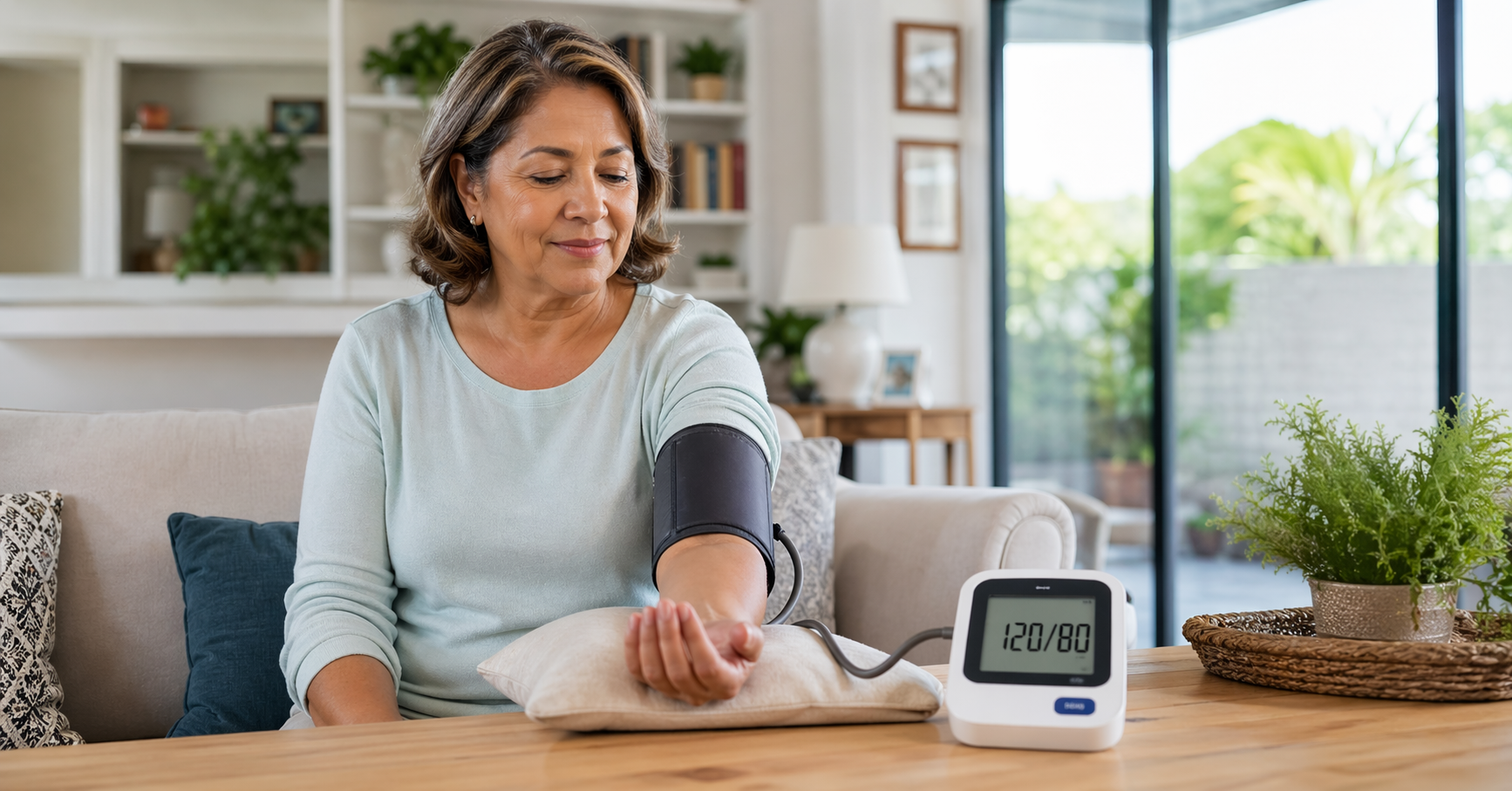


This year is almost over, and before 2025 says goodbye, I want to start with something very simple and very human: thank you.
Thank you for reading, for sharing, and for taking a few minutes each week to ask yourself:
“How can I take better care of my health?”
Thank you for letting me be part of your routine, even if it’s through a screen, like a family doctor who sits with you for a few minutes to check in on your life, not just your lab results.
From October until today, we’ve published 35 articles on Dr. Dándote Salud (Dr. Dan Giving You Health). Together we’ve talked about:
- What we can learn from the Blue Zones to live longer and better.
- How to lower blood pressure through lifestyle changes.
- The benefits of having a pet.
- Everyday keys to improving your lifestyle.
- How your lifestyle protects your bones.
- Why your relationships are a powerful secret for a happy, healthy life.
- How to protect your menisci and keep moving without fear.
- How your own body can stimulate GLP-1 (your “Ozempic-like hormone”) through lifestyle.
- Why reading before bed can help you sleep better.
- The true importance of vaccines and the myth that they cause autism.
- How to read food labels so you can eat with intention.
- What it means to live in a more anti-inflammatory way.
- And much more.
We’ve passed ten thousand visits, watched our social media community grow, seen our Dándote Salud Facebook group become more active, and slowly built a podcast that’s finding its place in your day.
But behind every number there is something far more important: you.
This final blog of the year is here to celebrate that.
Why talk about gratitude and community in a health blog?
Because your health is not just blood pressure, blood sugar, or cholesterol.
Your health is also:
- Who walks next to you.
- Who supports you when you decide to change.
- Who reminds you that you’re not alone when you try to eat better, move more, or sleep earlier.
Research is clear: people with stronger social ties and community support maintain healthy habits for longer than those who try to do everything alone, in silence (Murray, 2017; Carraça, 2021; Laddu, 2021).
That support can come from:
- In-person groups.
- Online communities.
- Team-based or peer-based health programs.
Group-based programs and community interventions —walking groups, community centers, peer-support programs— help people maintain changes in physical activity, diet, and cardiovascular risk factors better than purely individual approaches (Fernández-Alvira, 2021; Regeer, 2025; Mersha, 2024; Ochtera, 2018).
Digital communities —podcasts, Facebook groups, social media, online health platforms— can also support real lifestyle changes when they are used intentionally and guided by good evidence (Simeon, 2020; Grady, 2023; Chatterjee, 2021; Zheng, 2023; Petkovic, 2021; Zhou, 2022; Li, 2020; Betz, 2025).
By being here, reading this, you’re already part of a community that has chosen to live better.
What have we built together this year?
You and I, through this space, have talked about:
- Eating with intention, not just reacting to cravings.
- Moving your body every day, even if it’s just a little.
- Sleeping better, so you can think, feel, and decide more clearly.
- Managing stress, so it doesn’t run your life —or your health.
- Taking care of your bones, heart, and brain through daily choices.
- Understanding food labels, so marketing doesn’t speak louder than your health.
- Seeing vaccines as an act of self-care and care for others.
- Protecting your joints, especially your knees, so you can keep walking.
- Recognizing the power of relationships in your well-being.
- Using your own body as a GLP-1 generator, supporting weight regulation from within.
All of this stands on something we don’t always name: gratitude and social support.
What actually keeps a healthy habit going?
If I had to explain it using the 80/20 rule for health, I’d say:
The 20% that matters most for maintaining a habit is not:
- The perfect app.
- The perfect workout plan.
- The most complicated program.
The 20% that truly sustains change is:
- Your inner motivation
The “why” behind what you do.
Not just “I have to lose weight”, but “I want to have the energy to play with my kids”, or “I want to age with dignity and independence”. - Basic everyday skills
Planning meals, anticipating obstacles, organizing your schedule, setting out your workout clothes, and managing emotions without always turning to food or screens.
Studies show that effective behavior change techniques include setting clear goals, planning, identifying barriers, and troubleshooting ahead of time (Carraça, 2021; Grady, 2023; Chatterjee, 2021). - Your support network
People, groups, community —even if it’s digital.
Programs that include peer support, professional guidance, and regular contact (text messages, social media, online groups) lead to better results and more sustained change over time (Armanasco, 2017; Simeon, 2020; Mersha, 2024; Mutter, 2024; Petkovic, 2021).
Behavioral research shows that habits are more likely to stick when:
- They’re repeated daily in the same context, linked to clear cues in your routine.
- You have simple ways to track them: a notebook, a basic app, a list on the fridge.
- You have emotional and practical support: someone who reminds you, walks with you, or simply listens (McMahon, 2024; Regeer, 2025; Li, 2020).
Communities —in person or online— help because they offer:
- Ideas (information and strategies).
- Encouragement (shared emotions and stories).
- Accountability (“I said I would do this, now I’m more likely to try”).
This blog, the Dándote Salud community, the podcast, and our social channels exist to combine your personal effortwith the power of community.
How can you use this blog (and this gratitude) to care for your health in 2026?
Let’s keep it simple.
Here are three concrete steps you can start today.
Step 1: Pause and acknowledge what you DID achieve this year
It doesn’t matter if it feels big or small. Ask yourself:
- What changed this year in my health or my habits?
- Did any article from Dr. Dándote Salud make me think differently?
- What small step did I take that I wasn’t taking before?
More water, less soda, more walks, going to bed a bit earlier, asking for help, getting a check-up.
Write it down.
One line. Two lines. Whatever comes out.
That simple act is already a form of gratitude toward yourself.
It’s also a behavior change strategy: interventions that include self-monitoring and reflection tend to lead to better maintenance of new habits (Murray, 2017; Grady, 2023).
Step 2: Choose just ONE pillar to start or strengthen
Here at Dr. Dándote Salud (Dr. Dan Giving You Health) we work with eight pillars:
- Preventive focus.
- Conscious, healthy nutrition.
- Regular physical activity and movement.
- Restorative sleep.
- Stress management.
- Avoiding harmful substances.
- Positive relationships and meaningful social connections.
- Purpose and sense of meaning in life.
You don’t need to tackle everything at once.
Ask yourself:
“If I improved just ONE thing in the next three months,
what would give me the most peace and health?”
Some examples:
- If you choose sleep
- Turn off screens 30 minutes before bed.
- Read a book for 5–10 minutes instead of scrolling.
- If you choose movement
- Walk 10–15 minutes after one meal per day.
- Take the stairs once a day instead of the elevator.
- If you choose nutrition
- Add at least one vegetable to your lunch and dinner.
- Swap one sugary drink per day for water or unsweetened tea.
That consistent 20% is worth much more than any extreme diet or “perfect” routine that only lasts two weeks (Mozaffarian, 2012; Laddu, 2021).
Step 3: Don’t do it alone — lean on community
Your health improves when it is shared.
In the coming year, you can:
- Join the Dándote Salud Facebook community and participate: comment, ask questions, and share what you’re trying.
- Share articles that help you with someone you care about. That’s also an act of love.
- Follow us on social media (Facebook, Instagram, Threads, Bluesky, X, TikTok, YouTube, LinkedIn) and choose the format that fits your life best: audio, video, or short text.
Studies of digital and social media–based interventions show that when people actively engage —reading, commenting, interacting— they are more likely to maintain changes in diet, weight, and physical activity (Simeon, 2020; Zhou, 2022; Betz, 2025; Mersha, 2024).
A quick preview:
Soon, the podcast will have a video version on YouTube, plus more visual content on Instagram and TikTok to support you with practical, short, everyday tools.
What if you keep walking with us for one more year?
Imagine it’s December next year and you look back.
You don’t see perfection.
You don’t see a magazine-cover life.
But you do see:
- Less fear and more clarity about your health.
- More moments of calm in an ordinary day.
- Better energy to work, play with your family, or enjoy your hobbies.
- Less guilt and more of that feeling of “I’m actually doing something for myself.”
- A community you feel connected to, even if you’re reading from home, from work, or from your phone on the subway.
That is what I wish for you.
Not that you change your life overnight, but that you feel two key things:
- You truly have power over many aspects of your health.
- You don’t have to walk this road alone.
Thank you for walking with me
Thank you for every read, every click, every minute you’ve given to this space.
Thank you for trusting me as your digital family and lifestyle medicine doctor.
Thank you for allowing Dr. Dándote Salud (Dr. Dan Giving You Health) to be part of your journey.
I look forward to seeing you, hearing from you, and writing for you in 2026.
Step by step.
With intention.
With community.
And above all, with gratitude.
Scientific references
- Murray JM, Brennan SF, French DP, et al. Effectiveness of physical activity interventions in achieving behaviour change maintenance in young and middle aged adults: a systematic review and meta-analysis. Soc Sci Med. 2017;192:125-133. doi:10.1016/j.socscimed.2017.09.021
- Carraça E, Encantado J, Battista F, et al. Effective behavior change techniques to promote physical activity in adults with overweight or obesity: a systematic review and meta-analysis. Obes Rev. 2021;22(Suppl 4):e13258. doi:10.1111/obr.13258
- Fernández-Alvira JM, Fernández-Jiménez R, de Miguel M, et al. The challenge of sustainability: long-term results from the fifty-fifty peer group-based intervention in cardiovascular risk factors. Am Heart J. 2021;240:81-88. doi:10.1016/j.ahj.2021.06.006
- McMahon SK, Lewis BA, Guan W, et al. Effect of intrapersonal and interpersonal behavior change strategies on physical activity among older adults: a randomized clinical trial. JAMA Netw Open. 2024;7(2):e240298. doi:10.1001/jamanetworkopen.2024.0298
- Regeer H, Huizing A, Bilo HJG, et al. Community and behavior maintenance: the association of community factors with behavior maintenance outcomes in people with type 2 diabetes participating in a group-based walking intervention. Soc Sci Med. 2025;388:118730. doi:10.1016/j.socscimed.2025.118730
- Simeon R, Dewidar O, Trawin J, et al. Behavior change techniques included in reports of social media interventions for promoting health behaviors in adults: content analysis within a systematic review. J Med Internet Res. 2020;22(6):e16002. doi:10.2196/16002
- Armanasco AA, Miller YD, Fjeldsoe BS, Marshall AL. Preventive health behavior change text message interventions: a meta-analysis. Am J Prev Med. 2017;52(3):391-402. doi:10.1016/j.amepre.2016.10.042
- Mutter A, Bücheler M, Idrees AR, Domhardt M, Baumeister H. Persuasive design principle of social support in digital interventions targeting mental health symptoms: a systematic review and meta-analysis. BMJ Open. 2024;14(11):e086728. doi:10.1136/bmjopen-2024-086728
- Zhou P, Zhao Y, Xiao S, Zhao K. The impact of online health community engagement on lifestyle changes: a serially mediated model. Front Public Health. 2022;10:987331. doi:10.3389/fpubh.2022.987331
- Betz C, Al Masri M, König LM, Bartelmeß T. Identifying social media-based interactions that help adults to adhere to weight loss goals: a systematic review. Obes Rev. 2025;e70030. doi:10.1111/obr.70030
- Li Y, Yan X. How could peers in online health community help improve health behavior. Int J Environ Res Public Health. 2020;17(9):2995. doi:10.3390/ijerph17092995
- Grady A, Pearson N, Lamont H, et al. The effectiveness of strategies to improve user engagement with digital health interventions targeting nutrition, physical activity, and overweight and obesity: systematic review and meta-analysis. J Med Internet Res. 2023;25:e47987. doi:10.2196/47987
- Petkovic J, Duench S, Trawin J, et al. Behavioural interventions delivered through interactive social media for health behaviour change, health outcomes, and health equity in the adult population. Cochrane Database Syst Rev. 2021;5:CD012932. doi:10.1002/14651858.CD012932.pub2
- Mersha AG, Bryant J, Booth K, Watson L, Kennedy M. The effectiveness of internet-based group behavioural interventions on lifestyle modifications: a systematic review. Prev Med. 2024;186:108099. doi:10.1016/j.ypmed.2024.108099
- Chatterjee A, Prinz A, Gerdes M, Martinez S. Digital interventions on healthy lifestyle management: systematic review. J Med Internet Res. 2021;23(11):e26931. doi:10.2196/26931
- Zheng S, Edney SM, Goh CH, et al. Effectiveness of holistic mobile health interventions on diet, and physical, and mental health outcomes: a systematic review and meta-analysis. EClinicalMedicine. 2023;66:102309. doi:10.1016/j.eclinm.2023.102309
- Laddu D, Ma J, Kaar J, et al. Health behavior change programs in primary care and community practices for cardiovascular disease prevention and risk factor management among midlife and older adults: a scientific statement from the American Heart Association. Circulation. 2021;144(24):e533-e549. doi:10.1161/CIR.0000000000001026
- Mozaffarian D, Afshin A, Benowitz NL, et al. Population approaches to improve diet, physical activity, and smoking habits: a scientific statement from the American Heart Association. Circulation. 2012;126(12):1514-1563. doi:10.1161/CIR.0b013e318260a20b
- Ochtera RD, Siemer CJ, Levine LT. Supporting community-based healthy eating and active living efforts in sustaining beyond the funding cycle. Am J Prev Med. 2018;54(5 Suppl 2):S133-S138. doi:10.1016/j.amepre.2017.12.019
🌎 This article is also available in Spanish. Please use the language switcher in the top menu.
Discover more from Dr. Dándote Salud
Subscribe to get the latest posts sent to your email.

Related Posts
Fiber: the forgotten nutrient that protects your gut, heart, and brain
The Doctor Who Taught Me What Family Medicine Means