


Your body is a living maze where your genes are constantly “talking” with your environment: what you eat, how you sleep, the stress you carry, the air you breathe, the people you live with. That silent conversation, day after day, moves you either toward health… or toward chronic inflammation and disease.
As a family physician and lifestyle medicine doctor, when I talk about health pillars on Dr. Dándote Salud (“Dr. Dan Giving You Health”), I don’t take them lightly. These pillars are the 20% of actions that can create 80% of the benefit in your life: helping prevent, treat, and sometimes even partially reverse many inflammatory and autoimmune diseases.
Let’s talk about that:
how your genes, your environment, and your lifestyle mix to turn inflammation on or off…
and how an anti-inflammatory way of living can change your story.
Why should you care about “silent” inflammation?
Maybe this sounds familiar:
- “Everyone in my family has something: colitis, arthritis, thyroid disease, asthma.”
- “My labs are ‘normal’, but I feel tired, inflamed, and worn out.”
- “They told me it’s ‘genetic’… and I felt there was nothing I could do.”
I hear this every week in clinic.
The truth is tough but hopeful:
- Inflammatory and autoimmune diseases (rheumatoid arthritis, inflammatory bowel disease, psoriasis, asthma, multiple sclerosis, and many others) are rising in many countries, especially where lifestyle has become more “Westernized.”
- But a meaningful chunk of that risk is not fixed destiny.
It’s not only about your genes. It’s about how those genes get expressed in the environment you create inside your body.
Large cohort studies suggest that a combination of healthy habits (not smoking, moving regularly, Mediterranean-style eating, healthy weight) could prevent a significant proportion of cases of inflammatory bowel disease and other chronic conditions. No guarantees, but it definitely shifts the odds.
You cannot change the genes you were born with.
You can change the internal environment in which those genes work.
What’s actually going on inside your body?
Oxidative stress: when useful “sparks” turn into a wildfire
Picture each cell in your body as a tiny city with factories that make energy. As they work, they generate chemical “sparks” called reactive oxygen and nitrogen species.
- At normal levels, those sparks help:
- fight infections
- relay messages between cells
- regulate blood vessels
That’s what some researchers call oxidative eustress: useful, controlled stress.
Trouble begins when:
- too many sparks are produced (from smoking, pollution, poor diet, physical inactivity, chronic infections, chronic stress, poor sleep, certain drugs),
- and your defense systems (built-in antioxidants plus nutrients from food) can’t keep up.
Now you have oxidative stress:
those sparks damage fats, proteins, and even your DNA.
Over time, that damage keeps the fire of inflammation burning.
Epigenetics: how your environment “talks” to your genes
Epigenetics includes the chemical switches that turn genes on or off without changing the DNA itself. These switches respond to:
- diet quality
- environmental toxins and air pollution
- tobacco smoke
- infections
- psychological stress
- sleep patterns
- movement (or the lack of it)
In inflammatory and autoimmune diseases, researchers see:
- Epigenetic marks that turn up the volume on inflammatory genes and disrupt immune tolerance.
- Western-type diets high in saturated fats, sugar, and ultra-processed foods pushing toward more inflammatory epigenetic patterns.
- Diets rich in plants, fiber, omega-3 fats, and polyphenols supporting more protective patterns.
For you, the bottom line is simple:
your daily choices influence which genes speak louder in your body.
The exposome: everything you’ve been exposed to… for years
The exposome is the total of all exposures across your life:
- air (pollution, smoke, chemicals)
- water and food (pesticides, additives, ultra-processed products)
- lifestyle (tobacco, alcohol, inactivity, poor sleep, chronic stress)
- social factors (poverty, violence, loneliness, lack of nature)
- early-life events (birth mode, breastfeeding, childhood antibiotics, infections)
Over time, this mix can:
- disturb your gut microbiome,
- rewire your immune system,
- alter your epigenetic marks,
- and push your body toward chronic low-grade inflammation.
That’s where lifestyle pillars come in: they’re the levers you can pull to counterbalance some of the modern exposome.
How do you actually live more anti-inflammatory?
Let’s focus on the 20% of actions that give you most of the benefit, using the pillars of Dr. Dándote Salud.
Healthy nutrition: eat to calm inflammation
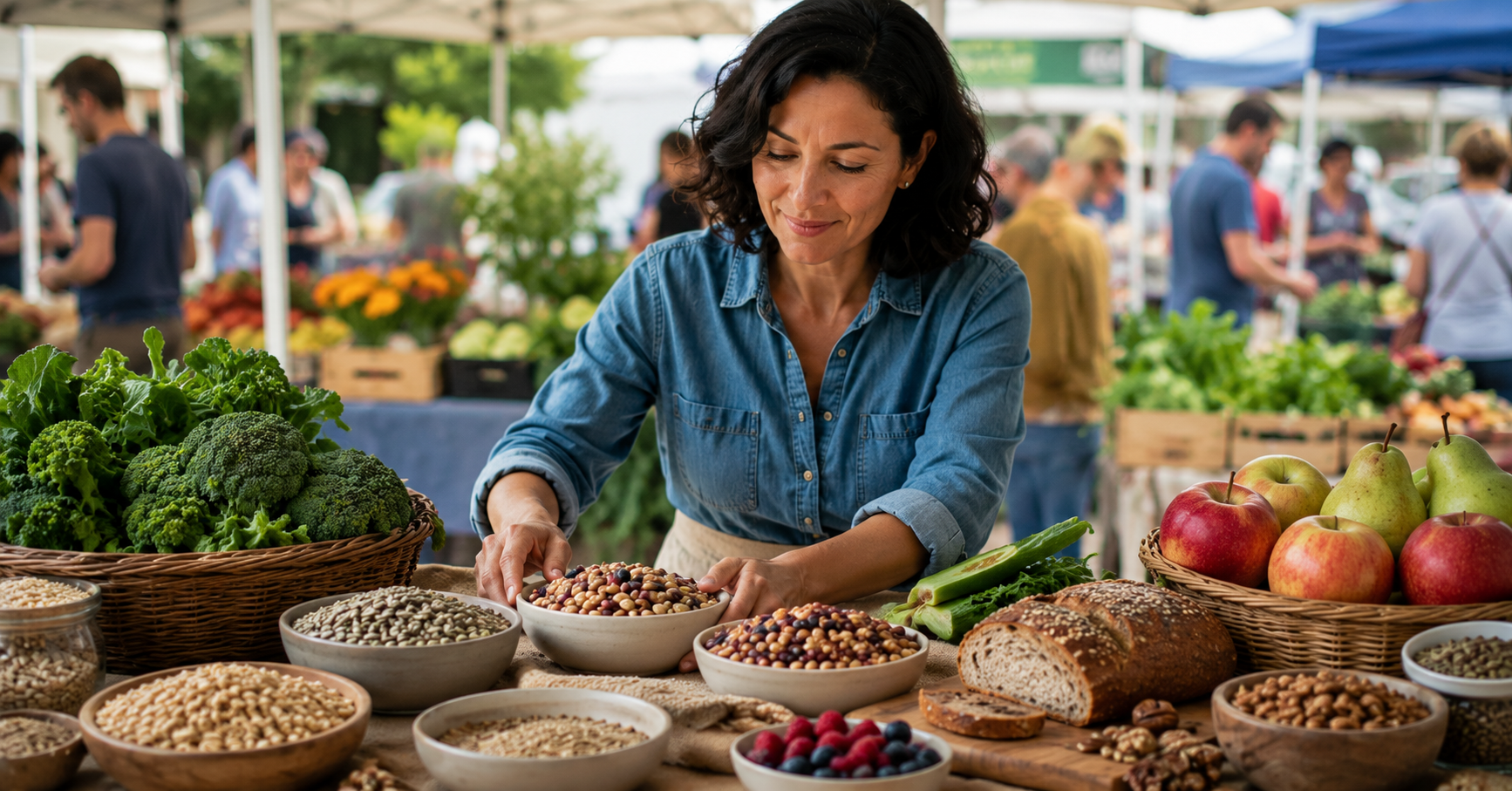
Think Mediterranean-style, anti-inflammatory eating:
- Fill half your plate with plants:
- Colorful vegetables (leafy greens, broccoli, cauliflower, peppers, etc.).
- Fruits (berries when possible, but all fruits count).
- Choose healthy fats:
- Extra-virgin olive oil as your main cooking fat.
- Nuts and seeds.
- Avocado.
- Pick proteins that protect:
- Fish, especially oily fish (salmon, sardines, mackerel) 2–3 times a week.
- Beans and lentils.
- Skinless poultry in moderation.
- Go for high-fiber carbs:
- Oats, brown rice, quinoa, whole-grain breads that are truly whole grain.
- Include fermented foods when you can:
- Plain yogurt, kefir, sauerkraut, kimchi, fermented vegetables.
And just as crucial as what you add is what you cut back on:
- Less:
- processed meats (bacon, deli meats, sausages)
- frequent red meat
- ultra-processed snacks and desserts
- sugary drinks
- fried fast foods
- excess alcohol
Don’t aim for perfection. Aim for progress:
- Swap sodas and sweetened drinks for water, sparkling water, or unsweetened tea.
- Add one extra serving of vegetables to lunch and dinner.
- Use olive oil instead of butter or highly processed oils.
Movement: the anti-inflammatory drug your body was built for
Sitting all day feeds inflammation; moving your body calms it down.
General target:
- At least 150 minutes per week of moderate aerobic activity
(for example, brisk walking 30 minutes, 5 days a week). - And 2–3 days per week of strength work (bands, light weights, bodyweight exercises).
If you’re starting from zero:
- Begin with 5–10 minutes of walking per day.
- Add a couple of minutes each week until you reach 30.
- Choose a form of movement you don’t hate: walking with a friend, dancing, cycling, swimming.
Restorative sleep: when your body turns down the flames
Poor sleep:
- worsens oxidative stress
- disrupts appetite hormones
- raises blood pressure
- and increases inflammation.
Simple sleep-supporting steps:
- Go to bed and wake up around the same time every day.
- Avoid bright screens 30–60 minutes before bedtime.
- Cut back on caffeine later in the day if it keeps you wired.
- Build a calm pre-sleep routine: reading, stretching, prayer, or breathing exercises.
Stress management: your immune system hears your thoughts
Unrelenting stress keeps your nervous system and immune system in “alert mode” and can:
- shift your gut microbiome,
- worsen sleep and food choices,
- amplify pain and fatigue.
A few realistic tools:
- 3–5 minutes of slow, deep breathing once or twice a day.
- Short movement breaks during work.
- Practices like prayer, meditation, journaling, or spending time in green spaces.
- Professional mental health support when anxiety, depression, or trauma are present.
Avoiding harmful substances: small choices, big impact
- Not smoking is one of the most powerful anti-inflammatory decisions you can make.
- If you do smoke, asking for help to quit is not weakness; it’s a deeply medical decision that protects your gut, lungs, vessels, and joints.
- Limiting or avoiding alcohol helps your liver, gut, brain, and immune system.
Positive relationships and purpose: human medicine
Loneliness, lack of support, and a life on “autopilot” are linked with higher inflammation and worse health outcomes.
- Invest in relationships where you feel seen and supported.
- Make time for family, friends, faith communities, clubs, or volunteer groups.
- Ask yourself:What gives my life meaning right now?
Where can I contribute, belong, and be needed?
Purpose doesn’t erase all pain, but it changes how your body and mind carry it.
What if you start today?
I won’t promise miracles.
Honest medicine doesn’t work like that.
But based on science and years of seeing patients change their lives, here’s what often happens when someone commits to anti-inflammatory living over months and years, not just a few weeks:
- More stable energy through the day.
- Less aching and stiffness for many people.
- Better control of weight, blood pressure, blood sugar, and cholesterol.
- Improved digestion and fewer inflammatory flares in some patients.
- Fewer flares of certain inflammatory diseases when these changes are combined with proper medical treatment.
- A shift from “I’m a victim of my genes” to “I do have some control.”
And something deeper:
you begin to feel that taking care of your health is not punishment…
it’s a way of celebrating your life.
You don’t have to do it perfectly.
You don’t have to do it alone.
If today you simply choose:
- a more colorful plate,
- a 10-minute walk,
- to turn your screen off 30 minutes earlier at night,
you’re already pulling real, biological anti-inflammatory levers in your body.
As your virtual family doctor here, I’m walking this road with you.
When you give yourself health, you give yourself life.
Important note
This article is for general educational purposes only. It does not replace the care or personalized recommendations of your own healthcare team. Lifestyle changes can substantially shift your risk of disease, but they do not guarantee prevention or reversal, and their impact depends on the specific condition.
If you live with inflammatory, autoimmune, or other chronic diseases, please talk with your clinician—and, ideally, a registered dietitian—before making major changes to your diet, exercise routine, or supplements.
🌎This article is also available in Spanish. Please use the language switcher in the top menu.
Sources
GBD 2021 Risk Factors Collaborators. Global burden and strength of evidence for 88 risk factors in 204 countries and 811 subnational locations, 1990–2021: a systematic analysis for the Global Burden of Disease Study 2021.Lancet. 2024;403(10440):2162-2203. doi:10.1016/S0140-6736(24)00933-4.
Mousavi SE, Amini H, Heydarpour P, Amini Chermahini F, Godderis L. Air pollution, environmental chemicals, and smoking may trigger vitamin D deficiency: evidence and potential mechanisms. Environ Int. 2019;122:67-90. doi:10.1016/j.envint.2018.11.052.
GBD 2023 Disease and Injury and Risk Factor Collaborators. Burden of 375 diseases and injuries, risk-attributable burden of 88 risk factors, and healthy life expectancy in 204 countries and territories, including 660 subnational locations, 1990–2023: a systematic analysis for the Global Burden of Disease Study 2023. Lancet.2025;406(10513):1873-1922. doi:10.1016/S0140-6736(25)01637-X.
GBD 2019 IMID Collaborators. Global, regional, and national incidence of six major immune-mediated inflammatory diseases: findings from the Global Burden of Disease Study 2019. EClinicalMedicine. 2023;64:102193. doi:10.1016/j.eclinm.2023.102193.
Piovani D, Danese S, Peyrin-Biroulet L, et al. Environmental risk factors for inflammatory bowel diseases: an umbrella review of meta-analyses. Gastroenterology. 2019;157(3):647-659.e4. doi:10.1053/j.gastro.2019.04.016.
Rodolfi S, Selmi C. Environmental factors and rheumatic diseases. Best Pract Res Clin Rheumatol.2025;39(2):102053. doi:10.1016/j.berh.2025.102053.
Ananthakrishnan AN. Epidemiology and risk factors for IBD. Nat Rev Gastroenterol Hepatol. 2015;12(4):205-217. doi:10.1038/nrgastro.2015.34.
Flies EJ, Mavoa S, Zosky GR, et al. Urban-associated diseases: candidate diseases, environmental risk factors, and a path forward. Environ Int. 2019;133:105187. doi:10.1016/j.envint.2019.105187.
van der Sloot KWJ, Amini M, Peters V, Dijkstra G, Alizadeh BZ. Inflammatory bowel diseases: review of known environmental protective and risk factors involved. Inflamm Bowel Dis. 2017;23(9):1499-1509. doi:10.1097/MIB.0000000000001217.
Dolinger M, Torres J, Vermeire S. Crohn’s disease. Lancet. 2024;403(10432):1177-1191. doi:10.1016/S0140-6736(23)02586-2.
Yang AZ, Jostins-Dean L. Environmental variables and genome-environment interactions predicting IBD diagnosis in large UK cohort. Sci Rep. 2022;12(1):10890. doi:10.1038/s41598-022-13222-0.
Piovani D, Danese S, Peyrin-Biroulet L, Bonovas S. Environmental, nutritional, and socioeconomic determinants of IBD incidence: a global ecological study. J Crohns Colitis. 2020;14(3):323-331. doi:10.1093/ecco-jcc/jjz150.
Shouval DS, Rufo PA. The role of environmental factors in the pathogenesis of inflammatory bowel diseases: a review. JAMA Pediatr. 2017;171(10):999-1005. doi:10.1001/jamapediatrics.2017.2571.
Li FR, Wu KY, Fan WD, et al. Long-term exposure to air pollution and risk of incident inflammatory bowel disease among middle and old aged adults. Ecotoxicol Environ Saf. 2022;242:113835. doi:10.1016/j.ecoenv.2022.113835.
Estevinho MM, Midya V, Cohen-Mekelburg S, et al. Emerging role of environmental pollutants in inflammatory bowel disease risk, outcomes and underlying mechanisms. Gut. 2025;74(3):477-486. doi:10.1136/gutjnl-2024-332523.
Lopes EW, Chan SSM, Song M, et al. Lifestyle factors for the prevention of inflammatory bowel disease. Gut.2022;gutjnl-2022-328174. doi:10.1136/gutjnl-2022-328174.
Reyneke GL, Lambert K, Beck EJ. Dietary patterns associated with anti-inflammatory effects: an umbrella review of systematic reviews and meta-analyses. Nutr Rev. 2025;nuaf104. doi:10.1093/nutrit/nuaf104.
Mensah GA, Arnold N, Prabhu SD, Ridker PM, Welty FK. Inflammation and cardiovascular disease: 2025 ACC scientific statement. J Am Coll Cardiol. 2025;S0735-1097(25)07555-2. doi:10.1016/j.jacc.2025.08.047.
Miller FW. Environment, lifestyles, and climate change: the many nongenetic contributors to the long and winding road to autoimmune diseases. Arthritis Care Res. 2025;77(1):3-11. doi:10.1002/acr.25423.
Ng SC, Bernstein CN, Vatn MH, et al. Geographical variability and environmental risk factors in inflammatory bowel disease. Gut. 2013;62(4):630-649. doi:10.1136/gutjnl-2012-303661.
Doherty T, McDermott E, Delany SJ, Mulcahy H, Murphy TM. Analysis of blood-based DNA methylation signatures of aging and disease progression in inflammatory bowel disease. Hum Genet. 2025;10.1007/s00439-025-02779-1. doi:10.1007/s00439-025-02779-1.
Bastida G, Mínguez A, Nos P, Moret-Tatay I. Immunoepigenetic regulation of inflammatory bowel disease: current insights into novel epigenetic modulations of the systemic immune response. Genes. 2023;14(3):554. doi:10.3390/genes14030554.
de la Calle-Fabregat C, Rodríguez-Ubreva J, Ciudad L, et al. The synovial and blood monocyte DNA methylomes mirror prognosis, evolution, and treatment in early arthritis. JCI Insight. 2022;7(9):e158783. doi:10.1172/jci.insight.158783.
Hammaker D, Firestein GS. Epigenetics of inflammatory arthritis. Curr Opin Rheumatol. 2018;30(2):188-196. doi:10.1097/BOR.0000000000000471.
Ballestar E, Sawalha AH, Lu Q. Clinical value of DNA methylation markers in autoimmune rheumatic diseases. Nat Rev Rheumatol. 2020;16(9):514-524. doi:10.1038/s41584-020-0470-9.
Ospelt C. Epigenetic biomarkers in rheumatology—the future? Swiss Med Wkly. 2016;146:w14312. doi:10.4414/smw.2016.14312.
Nair N, Wilson AG. Assessing the potential of epigenetic targets as biomarkers in the diagnosis and treatment of rheumatoid arthritis. Expert Rev Clin Immunol. 2023;19(5):483-488. doi:10.1080/1744666X.2023.2193686.
Ballestar E, Li T. New insights into the epigenetics of inflammatory rheumatic diseases. Nat Rev Rheumatol.2017;13(10):593-605. doi:10.1038/nrrheum.2017.147.
Fox-Fisher I, Shemer R, Dor Y. Epigenetic liquid biopsies: a novel putative biomarker in immunology and inflammation. Trends Immunol. 2023;44(5):356-364. doi:10.1016/j.it.2023.03.005.
Yu X, Pu H, Voss M. Overview of anti-inflammatory diets and their promising effects on non-communicable diseases. Br J Nutr. 2024;132(7):898-918. doi:10.1017/S0007114524001405.
van Zonneveld SM, van den Oever EJ, Haarman BCM, et al. An anti-inflammatory diet and its potential benefit for individuals with mental disorders and neurodegenerative diseases: a narrative review. Nutrients. 2024;16(16):2646. doi:10.3390/nu16162646.
D’Antonio V, Ramal-Sanchez M, Bravo-Trippetta C, et al. Unraveling the role of foods on chronic anti- and pro-inflammatory cytokines: a systematic review of chronic dietary intervention trials in humans. Nutrients.2025;17(17):2834. doi:10.3390/nu17172834.
Grosso G, Laudisio D, Frias-Toral E, et al. Anti-inflammatory nutrients and obesity-associated metabolic inflammation: state of the art and future direction. Nutrients. 2022;14(6):1137. doi:10.3390/nu14061137.
Kupczyk D, Bilski R, Szeleszczuk Ł, Mądra-Gackowska K, Studzińska R. The role of diet in modulating inflammation and oxidative stress in rheumatoid arthritis, ankylosing spondylitis, and psoriatic arthritis. Nutrients.2025;17(9):1603. doi:10.3390/nu17091603.
Campmans-Kuijpers MJE, Dijkstra G. Food and food groups in inflammatory bowel disease (IBD): the design of the Groningen Anti-Inflammatory Diet (GrAID). Nutrients. 2021;13(4):1067. doi:10.3390/nu13041067.
Hashash JG, Elkins J, Lewis JD, Binion DG. AGA clinical practice update on diet and nutritional therapies in patients with inflammatory bowel disease: expert review. Gastroenterology. 2024;166(3):521-532. doi:10.1053/j.gastro.2023.11.303.
Koelman L, Egea Rodrigues C, Aleksandrova K. Effects of dietary patterns on biomarkers of inflammation and immune responses: a systematic review and meta-analysis of randomized controlled trials. Adv Nutr.2022;13(1):101-115. doi:10.1093/advances/nmab086.
Discover more from Dr. Dándote Salud
Subscribe to get the latest posts sent to your email.

Related Posts
Fiber: the forgotten nutrient that protects your gut, heart, and brain

The Doctor Who Taught Me What Family Medicine Means