I’m going to talk to you the same way I do in the clinic, when someone looks at me seriously and asks:
“Doctor, is fish really healthy, or am I poisoning myself with mercury?”
Let’s go step by step. Breathe.
Fatty fish really is healthy
I’ll repeat this because it matters:
Eating fatty fish regularly is associated with fewer heart attacks, less cardiovascular death, and better heart health overall. This is not a fad. We see it again and again in studies and in cardiology guidelines.
Why?
Because fatty fish:
- Provides marine omega-3 fatty acids (EPA and DHA), which
- Lower triglycerides
- Help modulate inflammation
- Improve blood vessel function
- Reduce the risk of dangerous arrhythmias
- Gives you high-quality protein
- Provides vitamin D and B12, which many people are low in
Major cardiology societies recommend eating fish—preferably fatty fish—2 to 3 times per week.
Each portion is about 100–150 g (3.5–5 oz). In total, about 2 good-sized servings per week will usually get you to 225 g or more for the week.
Here’s an important clinical point:
The benefit of fish appears when it replaces foods that do harm.
- If you replace red meat or processed meats with salmon → you win.
- If you add salmon on top of hamburgers and bacon → you’re not doing prevention; you’re just adding more calories.
Another practical detail:
The benefit is stronger with simple preparations like baked, grilled, or steamed—not fried.
Frying fish changes its fat profile and takes away much of its protective effect.
How much fish “should” a healthy person eat?
For an adult who is not pregnant and doesn’t have advanced kidney disease, the safest and best-studied recommendation is:
- 2 to 3 servings of fish per week
- Portions of 100–150 g (3.5–5 oz)
- Ideally at least one of those meals with fatty fish
(for example, salmon, trout, sardines, herring)
The big fear: mercury, PCBs, PFAS
This is the uncomfortable part:
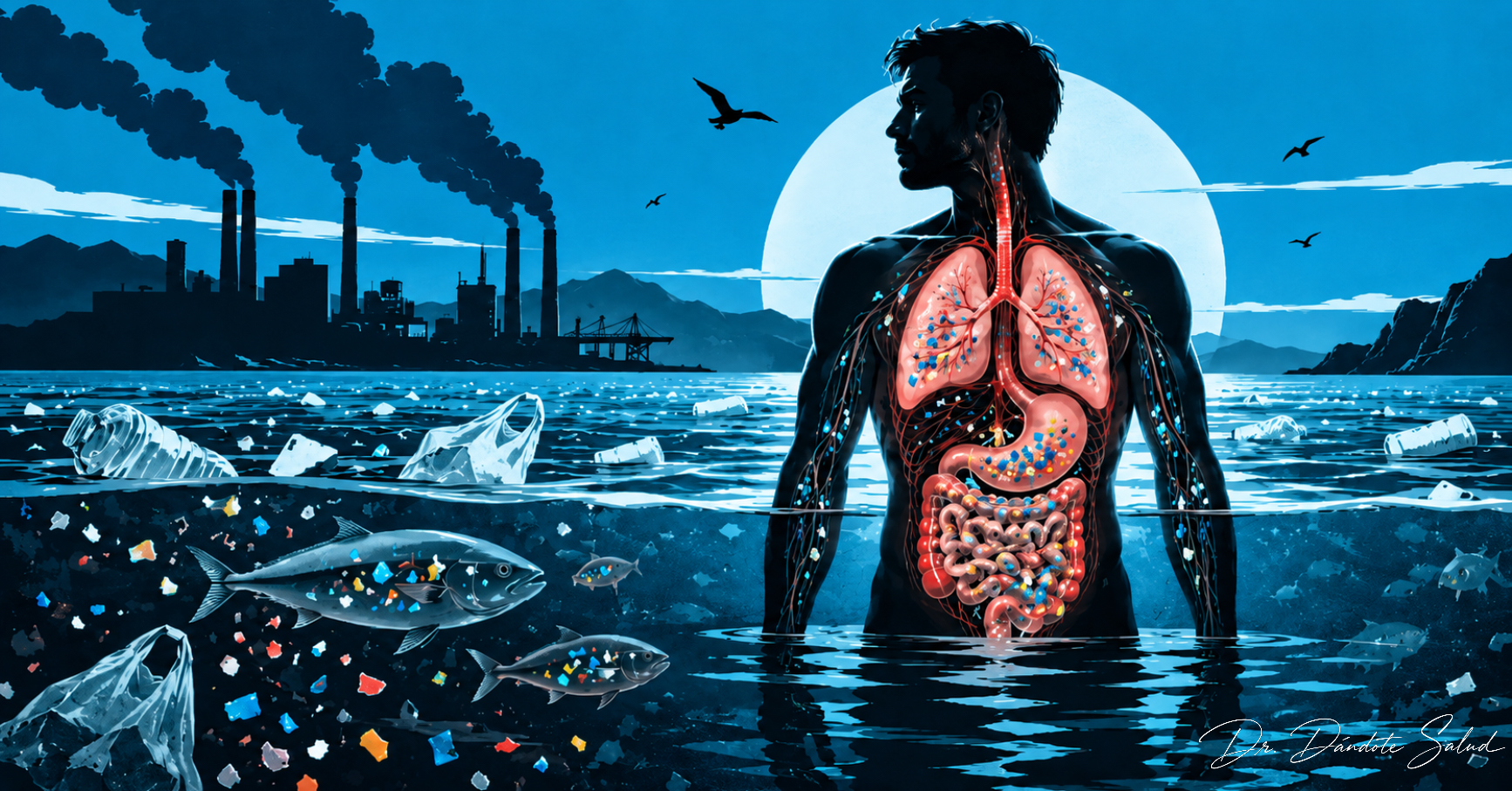
The ocean is no longer the pristine sea of 200 years ago. Fish do accumulate pollutants. That’s true.
But it’s also true that risk is not the same as panic.
Here’s a quick summary.
Mercury
Mercury accumulates more in large predatory fish that eat other fish, such as:
- Shark
- Swordfish
- Large tuna
- Pike
PCBs and dioxins
These are fat-soluble contaminants. They live in the fat of the fish.
Fatty salmon—both wild and farmed—can carry traces. But the levels we see today in commercially sold fish are within safety margins for weekly consumption in healthy adults.
Another important point: many of these contaminants concentrate in the skin and subcutaneous fat.
- Removing the skin before cooking
- Or choosing skinless fillets
…both help.
PFAS
PFAS are persistent industrial chemicals. We worry about them because they accumulate in the body and have been associated with hormonal issues, immune changes, and fetal development problems.
We do see PFAS in salmon. But not all fish carry the same load. In general:
- Skinless fillets
- And often farmed fish
…tend to show lower PFAS levels than some wild counterparts.
What does this mean for a pregnant person or a young child?
It means I prefer:
- 1–2 fish meals per week
- Using low-contaminant species, skinless
- Cooked with water (boiled, steamed, poached)
- And complement DHA with a high-quality supplement
instead of eating fatty wild fish with skin every single day.
I want you to see the pattern:
The risk is real, but we can reduce it with simple decisions.
Wild salmon or farmed salmon?
Let me give you the clinical answer, not the marketing one.
- Both are nutritious.
- Both contain long-chain omega-3s.
Farmed salmon tends to have more total fat. That means:
- More calories
- But also more omega-3 per portion
Wild salmon usually has:
- A more favorable omega-3 / omega-6 ratio
- A slightly leaner protein profile
About contaminants
In many analyses, farmed Atlantic salmon shows similar or even lower levels of mercury, dioxins, and PCBs compared with wild salmon. This surprises many patients because culturally “wild” always sounds purer.
Depending on the region, some farmed salmon can have other persistent organic pollutants coming from their feed. That varies with aquaculture practices.
Wild salmon, especially Pacific salmon, can have higher mercury and PCBs in some cases. Even so, at 2–3 servings per week in adults, both wild and farmed generally stay within safety margins.
Practical conclusion as your doctor:
You don’t need to obsess over wild vs farmed if your intake is moderate.
I do recommend variety:
- Don’t eat the same species
- From the same source
- Every day of the year
Rotating species reduces cumulative exposure to any specific contaminant.
What about other fish? Give me alternatives
Good regular options, low in mercury with a solid nutrition profile:
- Tilapia
- Cod
- Hake
- Sole/flounder
- Trout
- Shrimp
- Octopus
Sardines and anchovies:
Very rich in omega-3, affordable, sustainable, but sometimes with somewhat higher levels of certain emerging contaminants. I still recommend them—just not every day in pregnancy.
What do I prefer to limit in pregnant people and young children?
- Shark
- Swordfish
- Large tuna (bluefin, big albacore, etc.)
- Freshwater fish caught in locally polluted rivers or lakes, if we don’t know their safety profile
How to cook fish to protect your heart and lower toxins
Here’s where culinary medicine comes in. It’s not just what you eat. It’s also how you cook it.
Water-based cooking
- Boiled
- Steamed
- Poached
These techniques can help reduce some PFAS and other contaminants in the fillet. They also:
- Avoid adding extra fat
- Avoid burning oils
Gentle baking or grilling, without deep frying in reused oil, is also heart-friendly.
Air fryer:
Better than pan-frying in lots of oil, because you use less fat and still get a nice texture. So it’s kinder on your heart and metabolism—but it’s not the best method to reduce environmental contaminants.
Try to avoid:
- Deep-fried batters
- Heavy sauces
Don’t turn a heart-protective food into fast food.
A simple trick I recommend a lot:
- Cook the fish
- Discard the cooking liquid if you boiled or steamed it
- Serve the fillet with fresh herbs, lemon, garlic, pepper, and a bit of extra-virgin olive oil added after cooking
That way you get flavor without loading on sodium or unhealthy fats. And your heart stays happier.
So, is fish “good” or “bad”?
It’s neither angel nor villain. Let me put it simply:
- For most adults, eating fish 2–3 times a week instead of processed meats and red meats reduces cardiovascular risk and overall mortality.
- When prepared in a healthy way, fish supports heart, brain, and systemic inflammation.
- The risk from mercury, PCBs, and PFAS at that level of intake, using appropriate species, is low.
The risk goes up when:
- You eat large predatory fish very often
- You always eat the same species without variation
- You eat fish fried
- You’re pregnant and eat wild fatty fish with skin every day
Here’s an easy way to remember it for everyday life:
- Two or three times a week is fine
- Portions of 100–150 g (3.5–5 oz)
- Prefer skinless fillets from reliable sources
- Rotate species—don’t live on tuna alone
- Cook with water, grill, or steam—avoid frying
- If you’re pregnant or breastfeeding, use a certified omega-3 supplement to ensure DHA, and limit fish to 1–2 weekly meals of low-contaminant species
- Serve that fish with what truly saves lives:
vegetables, legumes, whole grains, nuts—not fries and soda
That’s lifestyle medicine:
A way of eating based on whole, mostly plant foods, with well-chosen marine protein, regular movement, good sleep, stress management, no tobacco, no excessive alcohol, and healthy relationships.
It’s not about one miracle food.
It’s about the whole pattern.
🌍 This article is also available in Spanish. Please use the language switcher in the top menu.
Abbreviations used in this article
Here are the abbreviations and acronyms with their meanings, so you can recognize them when you see them:
- EPA (eicosapentaenoic acid)
A marine omega-3 fatty acid with anti-inflammatory and cardioprotective effects. - DHA (docosahexaenoic acid)
Another marine omega-3. Essential for brain and vision development in the fetus and young child, and supports adult cognitive function. - PFAS (per- and polyfluoroalkyl substances)
A large family of persistent industrial chemicals. They accumulate in fish and in the human body. Examples include PFOS and PFOA. - PFOS (perfluorooctane sulfonate)
A specific type of PFAS, linked to hormonal and immune changes. - PFOA (perfluorooctanoic acid)
Another well-studied PFAS, associated with adverse effects in fetal development and possible increased risk of certain cancers. - PCBs (polychlorinated biphenyls)
Persistent organic pollutants that accumulate in fish fat and human tissues. Some PCBs are associated with metabolic risk and neurobehavioral effects in childhood. - PAHs (polycyclic aromatic hydrocarbons)
Compounds generated, among other sources, by incomplete combustion; they can also be found in fish exposed to polluted waters. Some PAHs are considered potentially carcinogenic. - NOAEL (No Observed Adverse Effect Level)
The highest dose of a substance at which no measurable harm is observed in toxicology studies. Used to estimate safety. - FDA (Food and Drug Administration, USA)
The U.S. regulatory agency that oversees food safety and certain health products. - EU (European Union)
Group of European countries that also set food and environmental safety limits. - BMI (Body Mass Index)
A measure based on height and weight used to estimate whether someone has normal weight, overweight, or obesity. - DASH (Dietary Approaches to Stop Hypertension)
An eating pattern rich in fruits, vegetables, legumes, nuts, and low-sodium foods, designed to reduce blood pressure. - USP (United States Pharmacopeia)
An independent organization that certifies supplement quality and purity. “USP Verified” means that supplement has been third-party tested for potency and contaminants. - B12 (vitamin B12 or cobalamin)
An essential vitamin for nerve function and red blood cell formation.
When we talk about “emerging contaminants” like PCBs, PFAS, PFOS, PFOA, we’re referring to these persistent environmental chemicals that public health is now watching more closely.
Sources
Lichtenstein AH, Appel LJ, Vadiveloo M, et al. 2021 dietary guidance to improve cardiovascular health: A scientific statement from the American Heart Association. Circulation. 2021;144(23):e472-e487. doi:10.1161/CIR.0000000000001031.
Jayedi A, Shab-Bidar S. Fish consumption and the risk of chronic disease: An umbrella review of meta-analyses of prospective cohort studies. Adv Nutr. 2020;11(5):1123-1133. doi:10.1093/advances/nmaa029.
Chen J, Jayachandran M, Bai W, Xu B. A critical review on the health benefits of fish consumption and its bioactive constituents. Food Chem. 2022;369:130874. doi:10.1016/j.foodchem.2021.130874.
Rimm EB, Appel LJ, Chiuve SE, et al. Seafood long-chain n-3 polyunsaturated fatty acids and cardiovascular disease: A science advisory from the American Heart Association. Circulation. 2018;138(1):e35-e47. doi:10.1161/CIR.0000000000000574.
Chamorro F, Otero P, Carpena M, et al. Health benefits of oily fish: Illustrated with blue shark, shortfin mako shark, and swordfish. Nutrients. 2023;15(23):4919. doi:10.3390/nu15234919.
Goel A, Pothineni NV, Singhal M, et al. Fish, fish oils and cardioprotection: Promise or fish tale? Int J Mol Sci.2018;19(12):E3703. doi:10.3390/ijms19123703.
Gil A, Gil F. Fish, a Mediterranean source of n-3 PUFA: Benefits do not justify limiting consumption. Br J Nutr.2015;113(Suppl 2):S58-S67. doi:10.1017/S0007114514003742.
Welty FK, Daher R, Garelnabi M. Fish and omega-3 fatty acids: Sex and racial differences in cardiovascular outcomes and cognitive function. Arterioscler Thromb Vasc Biol. 2024;44(1):89-107. doi:10.1161/ATVBAHA.122.318125.
McMullan JE, Yeates AJ, Allsopp PJ, et al. Fish consumption and its lipid-modifying effects: A review of intervention studies. Neurotoxicology. 2023;99:82-96. doi:10.1016/j.neuro.2023.10.003.
Jamioł-Milc D, Biernawska J, Liput M, Stachowska L, Domiszewski Z. Seafood intake as a method of non-communicable diseases (NCD) prevention in adults. Nutrients. 2021;13(5):1422. doi:10.3390/nu13051422.
Jurek J, Owczarek M, Godos J, et al. Fish and human health: An umbrella review of observational studies. Int J Food Sci Nutr. 2022;73(7):851-860. doi:10.1080/09637486.2022.2090520.
Mohan D, Mente A, Dehghan M, et al. Associations of fish consumption with risk of cardiovascular disease and mortality among individuals with or without vascular disease from 58 countries. JAMA Intern Med.2021;181(5):631-649. doi:10.1001/jamainternmed.2021.0036.
Hill EB, Reisdorph RM, Rasolofomanana-Rajery S, et al. Salmon food-specific compounds and their metabolites increase in human plasma and are associated with cardiometabolic health indicators following a Mediterranean-style diet intervention. J Nutr. 2024;154(1):26-40. doi:10.1016/j.tjnut.2023.10.024.
Moxness Reksten A, Ho QT, Nøstbakken OJ, et al. Temporal variations in the nutrient content of Norwegian farmed Atlantic salmon (Salmo salar), 2005–2020. Food Chem. 2022;373(Pt B):131445. doi:10.1016/j.foodchem.2021.131445.
Xu H, Newton R, Love DC, et al. Heavy metal risks in aquatic foods. Environ Int. 2025;205:109831. doi:10.1016/j.envint.2025.109831.
Mozaffarian D, Rimm EB. Fish intake, contaminants, and human health: Evaluating the risks and the benefits. JAMA. 2006;296(15):1885-1899. doi:10.1001/jama.296.15.1885.
Smith KL, Guentzel JL. Mercury concentrations and omega-3 fatty acids in fish and shrimp: Preferential consumption for maximum health benefits. Mar Pollut Bull. 2010;60(9):1615-1618. doi:10.1016/j.marpolbul.2010.06.045.
Ye X, Lee CS, Shipley ON, Frisk MG, Fisher NS. Risk assessment for seafood consumers exposed to mercury and other trace elements in fish from Long Island, New York, USA. Mar Pollut Bull. 2022;176:113442. doi:10.1016/j.marpolbul.2022.113442.
Kushi LH, Doyle C, McCullough M, et al. American Cancer Society guidelines on nutrition and physical activity for cancer prevention: Reducing the risk of cancer with healthy food choices and physical activity. CA Cancer J Clin.2012;62(1):30-67. doi:10.3322/caac.20140.
Demelash Abera B, Alefe Adimas M. Health benefits and health risks of contaminated fish consumption: Current research outputs, research approaches, and perspectives. Heliyon. 2024;10(13):e33905. doi:10.1016/j.heliyon.2024.e33905.
Jing M, Lin D, Lin J, et al. Mercury, microcystins and omega-3 polyunsaturated fatty acids in farmed fish in eutrophic reservoir: Risk and benefit assessment. Environ Pollut. 2021;270:116047. doi:10.1016/j.envpol.2020.116047.
Discover more from Dr. Dándote Salud
Subscribe to get the latest posts sent to your email.